
सोमवार, आश्विन ५ गते २०८३
सोमवार, आश्विन ५ गते २०८३

बुधवार , फाल्गुण ९, २०८०
By Lambodar Neupane
Introduction
1.1 Background
Vedic farming refers to an agricultural system inspired by ancient North Himalayan texts known as the Vedas or Rishi farming, which date back thousands of years. The Vedas are among the oldest sacred texts of Hinduism and contain knowledge and insights into special aspects of agriculture, which in modern times are called natural probiotics, natural nutrients, and natural vitamins, essential metals (Gold, Silver) used in farming. Vedic farming or natural probiotic farming promotes natural methods of cultivation, avoiding the use of synthetic chemicals and pesticides. In summary, it emphasizes the use of microorganisms, nutrients, vitamins, and hormones as natural fertilizer. .
Vedic or modern probiotic-based micro-nutrient farming also recognizes the interconnections of all elements within an ecosystem. It also emphasizes the importance of maintaining soil health, biodiversity, and the overall balance of the environment. For example, Vedic or modern probiotic-based micro-nutrient farming emphasizes efficient water management techniques such as irrigation. It encourages practices that minimize environmental degradation and promote long-term soil fertility. In conclusion, for many practitioners, Vedic or modern probiotic-based micro-nutrient farming is not just a set of techniques but a way of life deeply connected to spiritual beliefs and cultural traditions.
The use of natural probiotics acts as a bridge between Vedic farming and natural agricultural farming to create sustainable and productive farming systems suited to the challenges of the 21st century (Lal, 2008). As a result, there's a growing interest in natural probiotics—beneficial microorganisms—as a sustainable solution for soil improvement (García-Fraile et al., 2017).
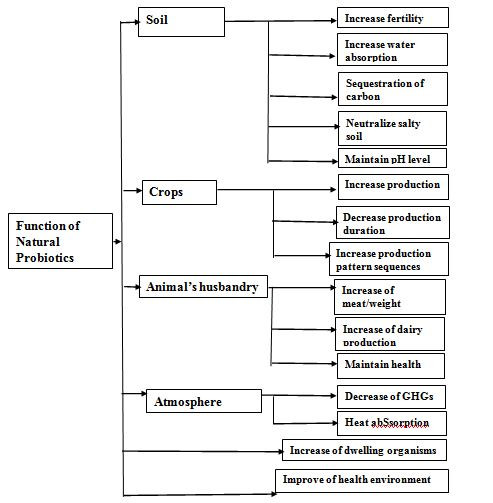
Natural probiotics encompass a wide array of microorganisms found in soil, twenty-one essential nutrients, gold, silver, and iron, and fermented organic matter (Katz, 2016). These include bacteria, fungi, protozoa, and nematodes, among others. Unlike synthetic fertilizers, which often disrupt the delicate balance of soil ecosystems, natural probiotics work synergistically to improve soil structure, fertility, and resilience (Tan et al., 2022). Thus, the natural probiotics used in soil have a significant capacity to sink atmospheric carbon and heat. Consequently, natural probiotics have been used to dramatically reduce climate change, which the world is seeking for sustainability.
Enhancing Soil Fertility:
One of the primary roles of natural probiotics is to enhance soil fertility (Majeed et al., 2018). Through processes like decomposition and mineralization, microorganisms break down organic matter, releasing essential nutrients such as nitrogen, phosphorus, and potassium (Condron et al., 2010). This nutrient cycling not only enriches the soil but also makes nutrients more accessible to plants, promoting healthier growth and higher yields.
A well-known natural probiotic is a scientific process, as described in “Rishi Kheiti,” which exemplifies this process. Composting involves the decomposition of organic materials like kitchen scraps, yard waste, and manure through the activity of bacteria, fungi, and other microorganisms (Raza, 2023).
Balancing Soil Microbial Communities:
The crucial function of natural probiotics is to balance soil microbial communities (Sahu et al., 2017). Healthy soil harbors a diverse array of microorganisms that contribute to nutrient cycling, disease suppression, and soil structure formation. However, intensive agricultural practices often disrupt this diversity, leading to imbalances that can negatively impact soil health. Natural probiotics help restore microbial diversity by introducing beneficial microorganisms into the soil (Bertola et al., 2021). For example, mycorrhiza fungi form symbiotic relationships with plant roots, enhancing nutrient uptake and improving soil structure. Similarly, bacteria such as rhizobia fix atmospheric nitrogen, making it available to plants and reducing the need for synthetic fertilizers.
Suppressing Soil borne Pathogens:
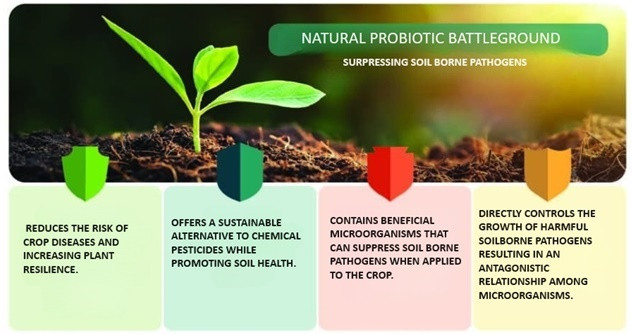
In addition to promoting soil fertility, natural probiotics play a crucial role in suppressing soil- borne pathogens (Hu et al., 2016). Certain microorganisms produce compounds that inhibit the growth of harmful bacteria, fungi, and nematodes, reducing the risk of crop diseases and increasing plant resilience (Basit et al., 2021. For instance, compost teas, which are liquid extracts of compost brewed with water, contain beneficial microorganisms that can suppress soil-borne pathogens when applied to crops. These teas act as natural biopesticides, offering a sustainable alternative to chemical pesticides while promoting soil health.
Improving Soil Structure and Water Retention:
Soil structure, the arrangement of soil particles and organic matter, is vital for water retention, aeration, and root penetration (Kay & Angers, 2001). Natural probiotics contribute to soil structure by aggregating soil particles, increasing porosity, and enhancing water infiltration rates. Fungi such as mycorrhizae produce hyphae, thread-like structures that bind soil particles together, creating stable aggregates that resist erosion and compaction. Similarly, earthworms, often considered nature's engineers, improve soil structure through their burrowing activity and the incorporation of organic matter into the soil (Le Bayon et al., 2021).Moreover, healthy soil rich in organic matter have greater water-holding capacity, reducing the risk of drought stress and improving overall crop resilience. Natural probiotics facilitate the decomposition of organic matter, increasing soil humus content and enhancing its ability to retain moisture (Gaveliene and Jurkoniene, 2022).
Promoting Sustainable Agriculture:
Promoting Sustainable Agriculture:
The adoption of natural probiotics aligns with the principles of sustainable agriculture, which seeks to minimize environmental impact while ensuring long-term productivity and resilience (Olmo et al., 2022). By harnessing the power of beneficial microorganisms, farmers can reduce their reliance on synthetic inputs, mitigate soil degradation, and support biodiversity conservation. Furthermore, natural probiotics offer cost-effective solutions for soil improvement, as they can be produced on-farm using locally available materials (Sagar et al., 2023). Composting, for example, utilizes organic waste streams that would otherwise contribute to landfill pollution, turning them into valuable resources for soil fertility and health.
Moreover, natural probiotics contribute to climate change mitigation by sequestering carbon in the soil. Healthy soils enriched with organic matter store carbon dioxide from the atmosphere, helping to mitigate greenhouse gas emissions and climate change effects (Rosenzweig& Hillel, 2000).
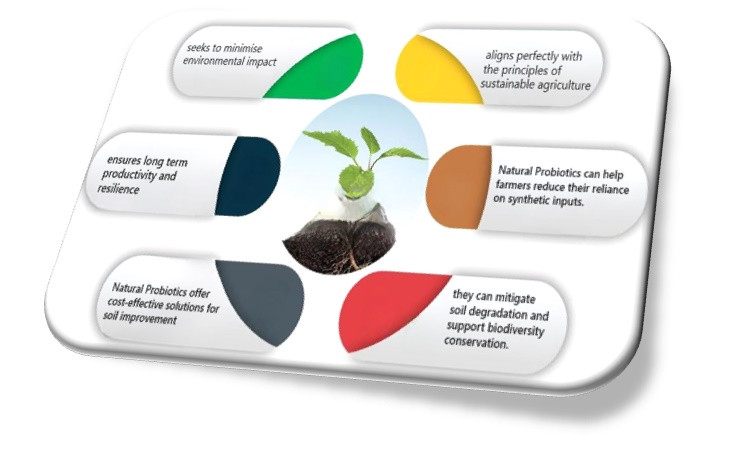
Figure 5. A diagram of sustainable agriculture farming helps from natural probiotics
Natural probiotic can significantly reduce their environmental impact while providing consumers with high-quality and sustainable products.
Sustainable Sourcing: Use organic and sustainably sourced ingredients for probiotics. For instance, organic fruits and vegetables can be used as substrates for fermenting probiotics.
Minimal Processing: Minimize the processing steps involved in producing probiotics to reduce energy consumption and waste generation. Opt for simple fermentation methods that require less energy.
Efficient Water Usage: Implement water-saving techniques in production processes and reuse water whenever possible to minimize water wastage.
Waste Management: Develop systems to recycle or compost waste generated during the production process. For example, leftover organic matter from fermentation can be composted and used as fertilizer.
Carbon Offsetting: Invest in carbon offset projects to compensate for any unavoidable greenhouse gas emissions produced during the production and distribution of probiotics.
Education and Awareness: Educate consumers about the environmental benefits of choosing natural probiotics and encourage eco-friendly practices such as recycling and composting.
Regenerative Agriculture: Adopt regenerative agricultural practices that enhance soil health, water retention, and biodiversity. Techniques such as crop rotation, cover cropping, and minimal tillage can improve soil structure and fertility over time.
Soil Conservation: Implement soil conservation practices such as erosion control, terracing, and agroforestry to prevent soil degradation and nutrient loss. Healthy soils are essential for sustaining long-term productivity.
Water Stewardship: Practice efficient water management techniques, including rainwater harvesting, drip irrigation, and water recycling, to conserve water resources and maintain ecosystem health.
Community Engagement: Engage with local communities and stakeholders to promote sustainable land use practices, support small-scale farmers, and foster social resilience.
Adaptation to Climate Change: Anticipate and adapt to climate change impacts by diversifying crops, adopting heat and drought-tolerant varieties, and implementing climate-smart agriculture practices.
Challenges and Considerations:
Natural probiotics offer numerous benefits for soil health and agricultural sustainability, their adoption may face certain challenges and considerations (Suman et al., 2022). Natural probiotics variability in microbial activity and effectiveness cannot be influenced by factors such as temperature, moisture, and soil pH (Awad et al., 2010). Additionally, there's a need for further research and education to ensure the proper application and management of natural probiotics. Farmers may require training and support to integrate these practices into their existing agricultural systems effectively (Jones et al., 2017).
Furthermore, regulatory frameworks and certification standards for organic farming often influence the adoption of natural probiotics. Clear guidelines and incentives may be necessary to encourage farmers to transition towards more sustainable soil management practices.
1.2 Objectives
General objective
The general objective is to enhance soil health for sustainable agriculture through the use of nature's probiotics.
Specific Objective
The specific objectives are the following:
Materials and methods
2.1 Study area
The study area is located at a whole agriculture farm in all districts of Nepal. Agriculture includes paddy (rice), wheat, sugarcane, potatoes, fruit farming, and even chicken. The use of natural probiotics in soil preparation is the best practice.
2.2 Materials
The prepared natural probiotics will be used. Generally, 100 ml of mother seed is mixed with 100 liters of water and kept for 9 days. Then, a liter of prepared natural probiotics will be added to 2 liters of water while being spread.
2.3 Methods
The following methods are used to achieve the mentioned objectives:
Improving soil structure and water retention through the use of natural probiotics involves strategies that promote the growth and activity of beneficial soil microorganisms while enhancing the physical properties of the soil (Naik et al., 2019). Here are several methods to achieve this:
Promoting sustainable agriculture through the use of natural probiotics involves employing techniques that enhance soil fertility, improve crop productivity, and reduce reliance on synthetic inputs (John et al., 2020). Here are several methods to achieve sustainable agriculture with natural probiotics:
Reducing climate change by sequestering carbon from the atmosphere involves various methods aimed at capturing and storing carbon dioxide (CO2) in vegetation, soils, and other natural reservoirs (Lal, 2009). Here are several methods to achieve this:
The expected outcomes will be the following:
Conclusions
Describing all about natural probiotics as above, natural probiotics is the only solution for all present global problems like climate change, soil health and agro production, livestock production, and water recharge. The evaluation of the project aimsarebased on the cost-benefit analysis (CBA). So, for this research project, agencies should be fund on natural probiotics used farming.
Contact to -
Natural Farming Activist
Kathmandu, Nepal
Contact us- [email protected]
Ph.no. +977 98630322418


